
Website vs Owned Sales Channel: The Difference Owners Actually Feel
A website publishes information. An owned sales channel captures demand, stores customer data, follows up, and reports what happened.
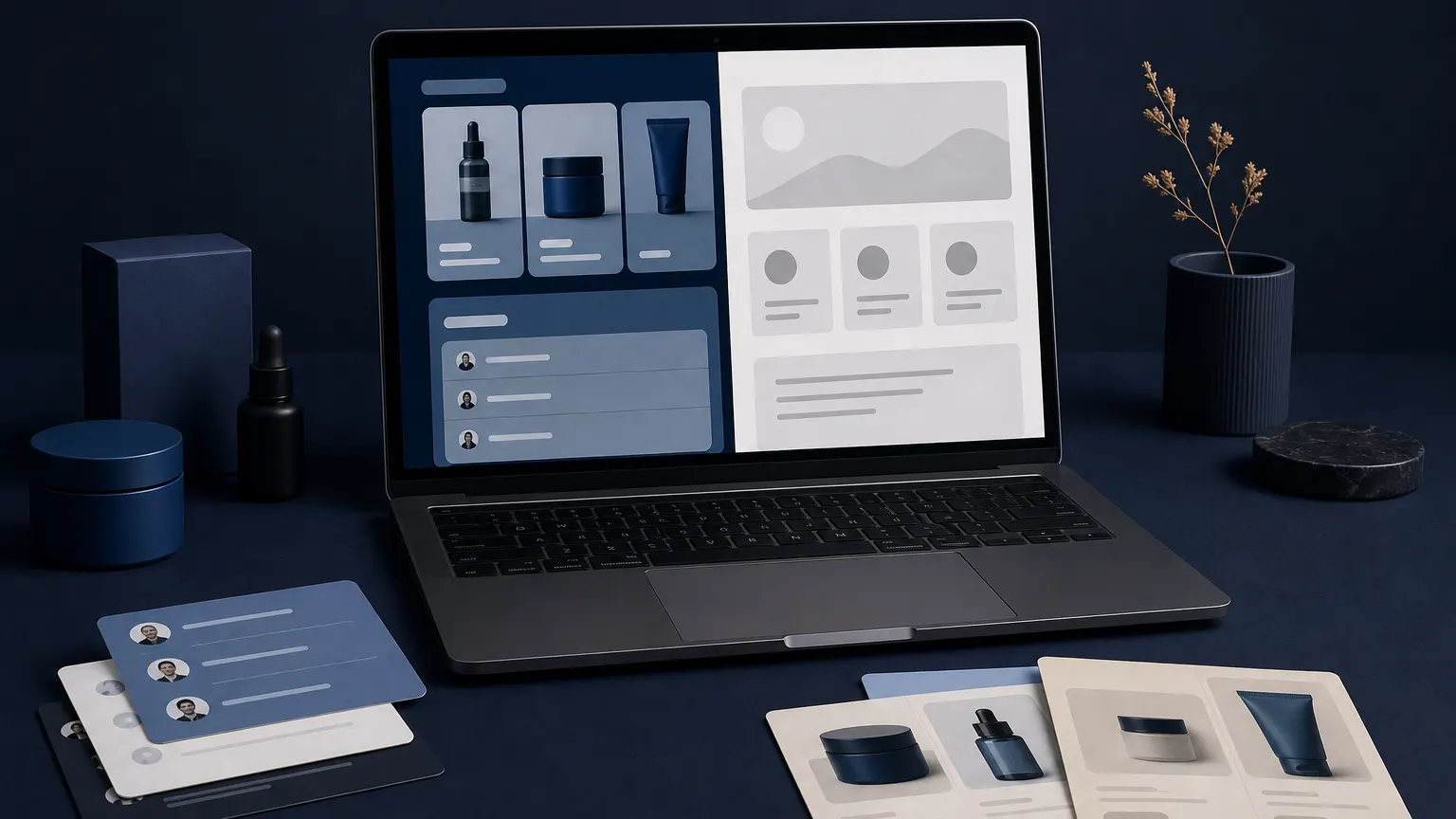
A website publishes. A sales channel moves.
A normal website says who you are and what you sell. Useful, but incomplete. An owned sales channel captures the lead, stores the customer, routes the follow-up, and reports whether revenue happened.
Academic CRM work backs this up: the system needs multichannel integration, information management, and performance assessment [S5]. If the site does not connect to those, it is mostly a brochure.
The market is too noisy for brochureware.
Indonesia ecommerce GMV reached $71B in 2025, while video commerce sellers grew 75% YoY S8. Buyers are moving across marketplaces, short video, WhatsApp, ads, referrals, and search. A static site does not keep up with that journey.
The owned channel does not need to be huge. It needs to catch demand and make the next action obvious.
- Website: pages, brand story, contact button.
- Owned channel: landing page or store, database, CRM, WhatsApp workflow, revenue report.
- Best setup: marketplace for discovery, direct channel for retention, dashboard for decisions.
Use cases that show the real difference.
Pi Co. drove 54% of Klaviyo revenue with email and SMS automations connected to Square [S8]. Corkcicle saw 93% growth in flow revenue after bringing email and SMS into one CRM layer [S10].
That is the difference owners feel. Not nicer pages. Cleaner follow-up, less guessing, and more repeat revenue you can trace.
References
- S3 — Google, Temasek, and Bain, e-Conomy SEA 2025 Indonesia report
- S5 — Payne & Frow, Journal of Marketing, “A Strategic Framework for Customer Relationship Management”
- S8 — Klaviyo customer stories: Pi Co. drove 54% of Klaviyo revenue with email and SMS automations integrated with Square
- S10 — Klaviyo customer stories: Corkcicle saw 93% growth in flow revenue after consolidating email and SMS in Klaviyo B2C CRM
Related guide
Build a sales channel you actually control.
This article is part of Datavore's owned sales channel series. For the full framework, read the pillar guide on landing pages, CRM dashboards, WhatsApp AI automation, customer databases, and revenue reporting.
Read the owned sales channel guide