
Build an Owned Sales Channel Before Platform Rules and Messy Follow-Ups Decide Your Margin
A practical guide for brands and service businesses that want their own lead capture, customer database, WhatsApp follow-up, and revenue reporting.
The problem is not traffic. It is ownership.
Indonesia already has demand online. Google, Temasek, and Bain put Indonesia ecommerce GMV at $71B in 2025, up from $62B in 2024. The same report says video commerce sellers grew 75% YoY to 800,000, with transaction volume up 90% YoY to 2.6B S3. That is a lot of buying activity. The question is who owns the relationship after the first order.
Marketplaces are useful for discovery and trust. But Shopee's own 2026 seller documentation lists percentage-based administration fees that can reach 11.70% for Shopee Mall and 10.00% for Star/Star+ sellers before other payment, processing, or optional program fees S1. Category tables show many common categories sitting in high single-digit fee territory S2. Fees are only one part of the issue. Limited customer access, platform rules, and weak follow-up are often more expensive over time.

An owned sales channel is the boring layer that protects revenue.
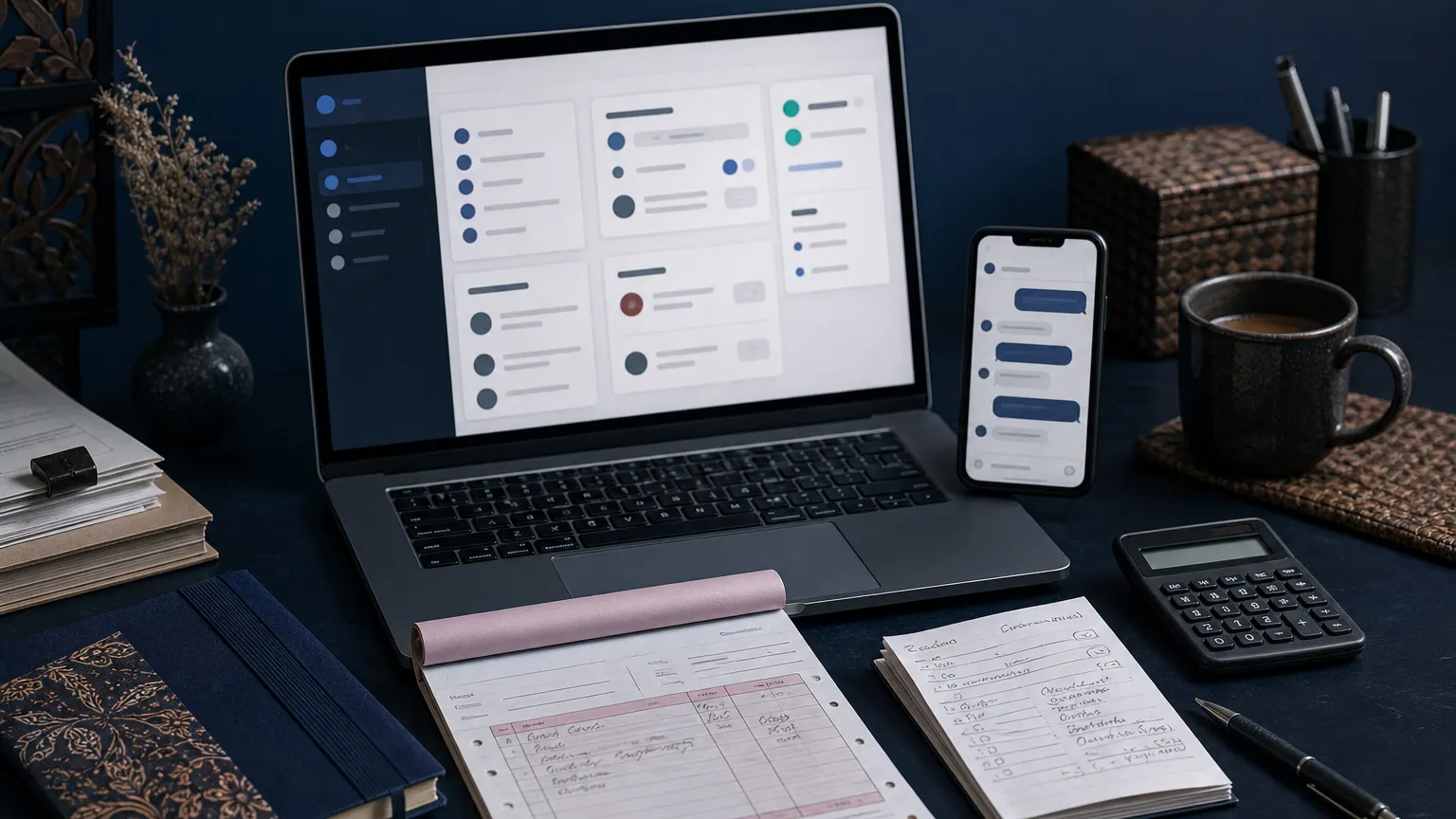
A real owned channel does more than make the website prettier. It catches leads, saves customer data, routes WhatsApp follow-up, tracks pipeline stages, and shows which channel created revenue. Payne and Frow's Journal of Marketing CRM framework makes the same point in academic language: CRM needs strategy, multichannel integration, information management, and performance assessment S5.
Retention is where this gets serious. Harvard Business Review summarizes Bain research showing that acquiring a new customer can cost five to 25 times more than retaining an existing one, and that a 5% retention lift can increase profits by 25% to 95% S4. If every repeat purchase has to be won again inside a rented platform, the business keeps paying for customers it should already know.
- Capture every inquiry and buyer into one database, with consent and source tracking.
- Keep WhatsApp as the conversation layer, but stop letting it be the only system.
- Measure first-time revenue separately from repeat revenue, because they behave differently.
Use case studies that actually match the goal.
The better examples are brands that got more value by centralizing customer data and owned follow-up. Klaviyo reports that ThirdLove drove 15x SMS ROI after consolidating email and SMS, while Half Magic grew repeat purchasers 5x with email, SMS, and Customer Hub S6S7.
Pi Co. drove 54% of Klaviyo revenue with email and SMS automations tied into Square. Good Protein reported 30x Klaviyo ROI, and Corkcicle saw 93% growth in flow revenue after consolidating email and SMS S8S9S10. Different markets, same pattern: when customer data, timing, and follow-up live in one system, retention becomes easier to manage.
References
- S1 — Shopee Seller Education, “Biaya Administrasi Penjual Shopee,” updated 28 April 2026
- S2 — Shopee Seller Education, “Rincian Biaya Penjual Shopee per Kategori Produk,” updated 25 February 2026
- S3 — Google, Temasek, and Bain, e-Conomy SEA 2025 Indonesia report
- S4 — Harvard Business Review, “The Value of Keeping the Right Customers”
- S5 — Payne & Frow, Journal of Marketing, “A Strategic Framework for Customer Relationship Management”
- S6 — Klaviyo customer stories: ThirdLove reported 15x SMS ROI after consolidating email and SMS in Klaviyo
- S7 — Klaviyo customer stories: Half Magic grew repeat purchasers 5x with Klaviyo email, SMS, and Customer Hub
- S8 — Klaviyo customer stories: Pi Co. drove 54% of Klaviyo revenue with email and SMS automations integrated with Square
- S9 — Klaviyo customer stories: Good Protein reported 30x Klaviyo ROI with email and SMS
- S10 — Klaviyo customer stories: Corkcicle saw 93% growth in flow revenue after consolidating email and SMS in Klaviyo B2C CRM
Related guide
Build a sales channel you actually control.
This article is part of Datavore's owned sales channel series. For the full framework, read the pillar guide on landing pages, CRM dashboards, WhatsApp AI automation, customer databases, and revenue reporting.
Read the owned sales channel guide